Creative Heroes
Rejecting Cynicism Thru Honoring Ancestors - A Creative & Spiritual Practice

Confucius believed that filial piety, the honoring of our ancestors, is the prime virtue of heroic character & the foundation of society.
Filial piety is the foundation of society.
Likewise, Moses commanded the Hebrews to honor their father & mother, “that it may be well with you and you may live long on the earth.” (Exodus 20:12)
The Hindu avatar Rama dutifully upheld the command of his father, King Dasarath, even though it unjustly banished him to 14 years of exile on the eve of his coronation. The Ramayana tells the story of his virtue & its reward — ultimate triumph.
Homer sang of heroes. Heraclitus believed that “character becomes destiny.” Plato believed that the ideal could be visualized in the mind and manifested in physical form. Aristotle believed that excellence is not an act, but a mindset.
Character becomes destiny.
How is it that the ancient Chinese, Jews, Indians and Greeks converge on this principle, of heroic son & daughters, upholding virtue by serving their ancestors & embodying the ideal?
The Cult of Steve Jobs
Taking Steve Jobs as a cliché example, precisely because it is a cliché example, I will speak in the Romantic & Cynical inner voice, so that we hear the contrast, and train ourselves to trust the romantic & distrust the cynic.
Romantic Voice
My lover is reading Walter Isaacson’s biography of Steve Jobs, whom, along with Leonardo da Vinci, was one of the great heroes of my adolescence.
To me, Steve was Leonardo reincarnate. His mere existence — the fact that such a person could exist in real life, could be alive & on this planet at the same time as me, performing creative miracle after miracle — gave me faith in human potential. It meant that magic was real.
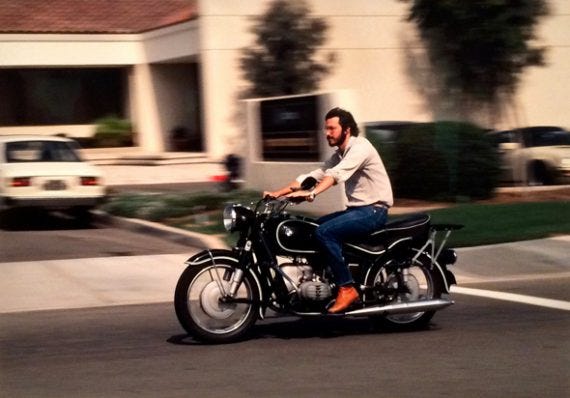
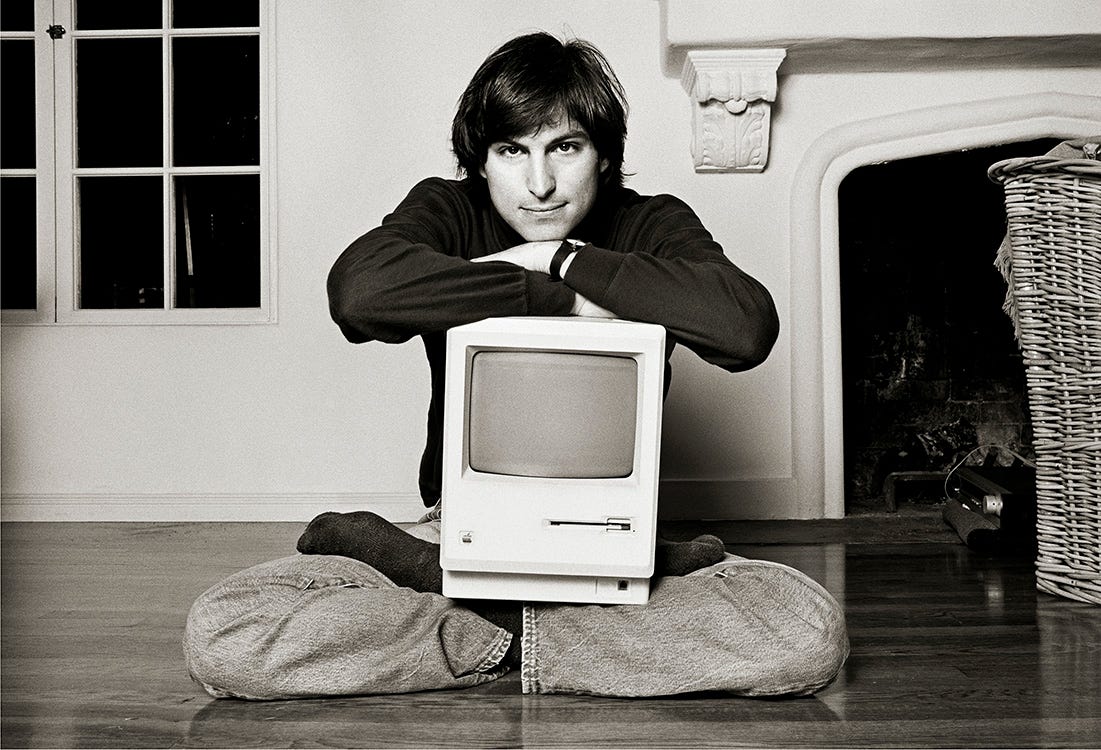
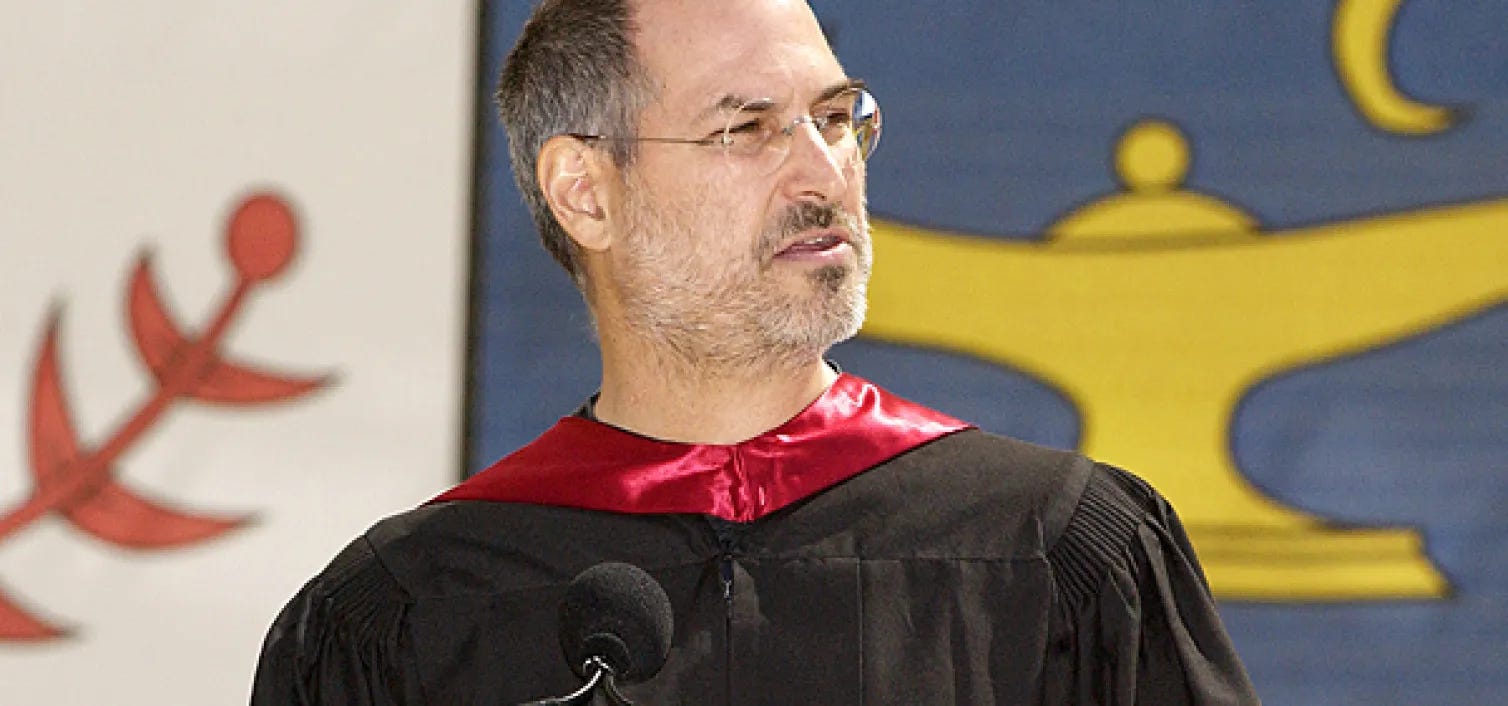
The glory of history, legend & myth restored by a living successor! Like an avatar of divine creativity… Journeying to India & doing LSD in the 1970s?! Riding a BMW?! Cradling the first personal computer in a yoga pose!? The 2005 Stanford Commencement Speech - universal guru & master of oratory? Blockbuster product announcements like revelations from heaven?! Singlehandedly funding Pixar, taking it to multiple blockbusters, an IPO & acquisition, pioneering digital animation & computer graphics, two new industries?!
HE WAS SO EPIC. He had taste. He was a cultural icon with a natural charisma & influence that arguably no entrepreneur before or since has matched, and that very few have even approached.
Without him, where would we be today? Personal computing would be less beautiful, user friendly & powerfully immersive. And how many entrepreneurs like me would have been lost without his example?
How did he do it?! He wasn’t from a rich family! He dropped out of college! He wasn’t a software engineer or computer scientist! He was an orphan!
Cynical Voice
What are you talking about?! Steve Jobs was an ASSHOLE! In various ways, he betrayed everyone who was close to him. He wasn’t a genius, other than marketing himself & his companies - he didn’t really invent any new technology, just repackaged it. It’s not cool to fawn over him. Don’t be too enamored. Stay critical. Critics are cool. Romantics are naive fools. The thing to do with heroes is to cut them down to size. Talk about their flaws & weaknesses. Expose them as frauds. Make them small, so that we don’t feel small…
With banishment of Hermodoros the Ephesians said,
“No man should be worthier than average.”
Thus whoever would seek excellence today
finds that it has been BANISHED.
— Heraclitus, Fragment 114
Rejecting Cynicism
Neither voice is balanced. But suppose there were two identical people: one who listened only to the romantic voice, and one who listened to the cynical voice. Which would be happier, achieve more and have a more positive impact on others? There is no question in my mind that the romantic tends towards the light, the cynic tends towards darkness, but that the supreme virtue consists in the harmony beyond opposites. However, in our cynical society, the first step in that evolution is the rejection of cynicism, and the embrace of romanticism.
Cynicism is a mind virus. Society defaults to cynicism because of our vices: it feeds our jealousy & protects our insecurity. There is a certain logic to “objective criticism,” but it usually masks the shadows within the psyche of the critic.
Romanticism is the path of true virtue… History should be accurate, biographies should seek the truth… but not in order to tear down. We learn to imitate. We’re looking for role models. We’re in search of excellence among humans. Virtue has left a record in the past. Blessed are the earnest & sincere devotees, they shall inherit the earth.
Visit the Pantheon. Steve Jobs & Leonardo da Vinci are hardly the only creative heroes in the history books. History is luminous. As Pericles, himself great, said in his funeral oration, ‘the wide earth is a monument to the pantheon of heroes, the victorious dead.’ Their deeds made the civilization we inhabit.
Harmony Beyond Opposites
Having switched our default attitude from cynical to romantic, there is a further step in our evolution, which is to seek the harmony beyond opposites — reintegrating the ‘dark’ insight of the cynic within a romantic honoring of ancestors…
Reversal: of course, blind admiration & imitation, taken to an extreme, can cause just as much damage as jealous cynicism — although in our times the former vice is far more rare than the latter, in history both vices have led to ruin.
Harmony: the ideal then is to honor the past & the ancestors, while holding the tension of objective criticism: recognizing both their virtues & their vices, learning from both.
“The mind, to think of the accord that strains against itself,
Needs strength, as does the arm to string the bow or lyre.”
“From the strain of binding opposites comes harmony.”
“The harmony past knowing sounds more deeply than the known.”
A Creative & Spiritual Practice
We find romanticism difficult, because we’ve hardened our hearts. To let inspiration in, we have to soften our hearts, to become receptive. This is why honoring the ancestors is a creative & spiritual practice.
Meditate daily on those who came before us, who showed us the way. Adopt them as your spiritual ancestors, your mothers & fathers - they belong to the world, they gave us our shared inheritance. Pray, ask heaven to move through you as it moved through them. Let them speak to you, to give you ideas, to visit you with inspiration...
The world still needs heroes. Even though there are no more knights in shining armor, rescuing damsels in distress, slaying dragons, fending off barbarians at the gate, rescuing kingdoms… the world still needs heroes. Even heroes who wear black turtlenecks, blue jeans & walk barefoot. Or heroes who imagine helicopters five centuries before the technology exists to build them!
Romanticism, expressed honestly & directly, is painfully earnest, even cringe. And yet it is precisely that voice which you should listen to, nurture & protect inside of you.
Read Joseph Campbell’s The Power of Myth or Hero’s Journey. Read Will & Ariel Durant’s Heroes of History. Read either history or myth, and you will find heroes. Let them inspire you.
Dissolving Ego & Pride
Through honoring our ancestors, we begin to imitate them & to carry on their work, which is the work of civilization: the work of leadership & enlightenment. But the outer work proceeds from the inner work, which is paradoxically hampered by ego…
It is only by recognizing our inadequacy that we can find inspiration. It is only by recognizing our insignificance that we can find significance. It is only by surrendering our need for importance that we can achieve something of true importance. Humility & service are the path to greatness. Even when every biological, psychological, economic & social incentive points to self-aggrandizement, somehow there is a natural limit, a self-destructive tendency. How can we overcome ourselves?
“He who has conquered his own mind has conquered the universe.”
— Srimad Bhagavatam, Sage Angira to King Chitraketu, Chapter IV
The essence of the paradox is this: the hero wants to change the world, but must first change within. The larger the external ambition, the deeper the inner transformation required.
The world ultimately cannot be saved, conquered or controlled, nothing it contains can provide ultimate satisfaction, and all mortals are doomed to die… Any conquest of the world begins with a conquest of the self. To truly conquer the world, one must truly conquer oneself.
Hinduism articulates the four “aims” of life, the Purusharthas: Dharma (calling/destiny/duty/wisdom), Artha (success/wealth/power), Kama (pleasure) and Moksha (freedom/joy/transcendence/enlightenment).
Heroism is often born in selfishness. The hero ultimately desires pleasure (Kama), and is willing to make sacrifices to achieve success (Artha) as a precondition for pleasure (Kama). In so doing, the hero discovers his or her unique Dharma, or calling in life. But somewhere along the way, the mystery of Moksha begins to take place, as inner transformation is required to transcend external obstacles.
Heroism can be a mask for the ego, for pride. The desire for ‘impact’ & legacy can be a mask for selfish ambition, for self-importance & self-aggrandizement, for lust & fame. It’s true! All these things are inside me, and inside you, and inside everyone who is not fully enlightened. As Krishna tells Arjuna in The Bhagavad Gita, addressing this exact dilemma, path of enlightenment is not necessarily a renunciation of the world, indeed, such a renunciation can be cowardly & hinder spiritual progress. Our duties & destinies in the world must be embraced. We each have a calling. Humility must be found in the path of action, and renunciation in detachment from results.
Dissolving Shame & Insecurity
Heroes are tempted to judge others as “less” than, but this is exactly how they judge themselves — harshly, against the ideal… Behind pride is shame. Heroism begins with the overcoming of shame: accepting that no matter how humble our beginning, we have a role to play. Only later does that shame become pride & self-importance, but even as the hero approaches the ideal, the hero never achieves it — thus the shame never really goes away.
“Give me one man
From amongst ten thousand
If he be the best.”
In this way, Heraclitus was a prophet heralding Socrates, who would come later, whom the Oracle of Delphi would proclaim as the wisest & thus greatest among the living, to which Socrates responded with wisdom supreme, “For I know that I know nothing.” Thus Heraclitus says, “The way up is the way back,” (F. 69) and “The beginning is the end,” (F.70) He is referring to the hero’s journey, which is the soul’s journey. Once the hero’s pride dissolves, shame is revealed, once the shame dissolves, the soul’s journey is glimpsed. The soul’s journey is an eternal hero’s journey, as we learn & evolve, lifetime after lifetime. Thus Heraclitus reflects,
“The soul is undiscovered,
Though explored forever,
To a depth beyond report.”
Discrimination & judgement are necessary aspects of the intellect, of worldly perception & leadership, but spiritually, they are corrupting, because we cannot see all ends. We cannot fully see each person’s soul. We cannot see the full tapestry of karma. We cannot see their past, their future — where they are at in their journey. Thus, Heraclitus says,
“Even a soul submerged in sleep is hard at work,
and helps make something of the world…”
The spiritual temptation of heroes is pride. The spiritual temptation of everyone else is shame. Both are traps. If the soul is eternal & reincarnates until every lesson has been learned… If while we sleep, our soul returns to another place, remembering its place in the great dance… Then even a soul submerged in sleep is hard at work, and helps make something of the world. Just as the hero would not be a hero without the villain, so the same goes for the butcher, the baker & the candlestick maker.
And indeed, who can fathom the accounting of heaven?
“And Jesus looked up and saw the rich putting their gifts into the treasury, and He saw also a certain poor widow putting in two mites. So He said, “Truly I say to you that this poor widow has put in more than all; for all these out of their abundance have put in offerings for God, but she out of her poverty put in all the livelihood that she had.”
— The Widow’s Mite, The Gospel of Luke, Chapter 21
What is small, like a seed, may someday turn into a large tree. Who is considered least may be considered greatest. The highest reality & the secret truth of things is not as it appears now, to our worldly understanding.
No matter how off track you feel you are, no matter how much you feel like you’ve messed up, no matter how sure you are that you aren’t a hero & can’t become a hero & have nothing to learn from heroes… The more certainly your journey is about to begin.
Some heroes attain their calling on the brink of death. And all lives are merely a preparation for the next. Our pasts, though irrevocable, invite alchemical learning & healing — mistakes into wisdom, brokenness into transformation, and weakness into strength.
A mother who raises a son who cures a disease; a father who raises his daughter to create inspiring art; a wife who supports a husband who creates wealth for thousands; a friend who through steady encouragement lifts his friend out of depression, who goes on to greatness — do they not share in the merit? Who can see all ends? Karma is a tapestry none can unravel.
There is a mystical belief that sometimes as few as 36 hidden people on the planet actively uphold civilization & prevent it from destroying itself - and that these 36 may not even be aware of themselves or their heroic role. In another tradition, there may be as few as 5. In yet another tradition, there are countless saints hidden among us.
The principle is the same: recognize heroes in all shapes & sizes, honor them, imitate them, follow your calling & do your part… however small it is. And surrender to the flow of life, without clinging too tightly to any outcome.
Recognizing The Divine Spark
Every mortal is a spark of the divine. All of us coming from & returning to the same source. A hero is someone in whom you recognize divinity. What we see in them, exists in us. Recognizing it in them, awakens it in us.
Namaste is the force upholding society: from filial piety, we gain piety & virtue, honor & respect in general. This learning to bow begins with those who have come before, because we are less jealous of them, we don’t compete with them, and they have given everything to us - thus they are easier to admire. Then it extends to everyone & everything else. Admiration, once cultivated, becomes a strength of the heart, the ability to transcend our ego. To recognize that ALL IS ONE.
“The LOGOS [The Universal Principle] proves those first hearing it as NUMB to understanding as the ones who have not heard… YET ALL THINGS FOLLOW FROM THE LOGOS.
Some, blundering with what I have set before you, try in vain, with empty talk, to separate the essences of things and say how each thing truly is.
And all the rest make no attempt. They no more see how they behave broad waking than remember clearly what they did asleep…
FOR WISDOM, LISTEN… not to me, but to the LOGOS…
and KNOW THAT ALL IS ONE.
“O noble soul, open thy divine sight and regard and honor all beings as Myself. Wise is he who looks with an equal eye upon all beings, seeing The One indwelling God in the hearts of all. He who meditates on my divine nature as present in every man becomes free from rivalry, from jealousy, from hatred, and from the consciousness of ego.
One who has realized Brahman sees Brahman everywhere and in all. To look upon all beings as myself, and to shape one’s conduct towards them accordingly, in thought, word and deed — that is the best method of worship. Such is the wisdom of the wise, and the insight of the intelligent by which in this very birth — this illusory & fleeting existence — one may reach even to me, The Real and The Eternal.”
— Srimad Bhagavatam, Krishna to Uddhava, Chapter XXI
“If the doors of perception were cleansed
every thing would appear to man as it is, Infinite.
For man has closed himself up,
till he sees all things thro' narrow chinks of his cavern.”
— William Blake, The Marriage of Heaven & Hell